
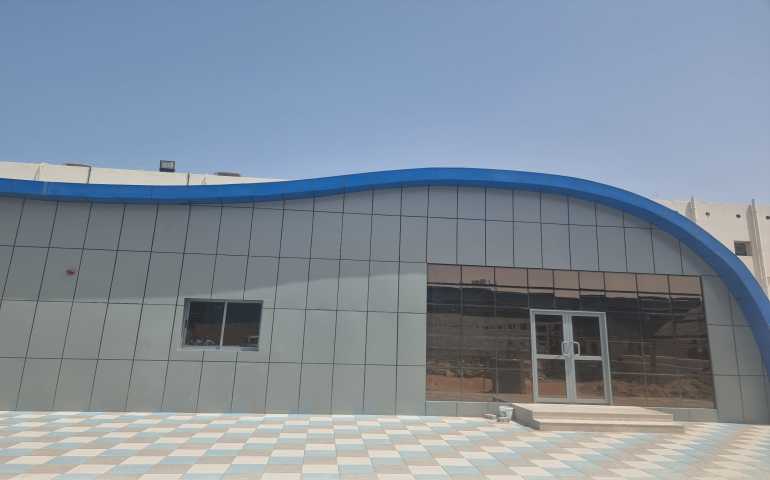
OFFICE BUILDING
Project Description: The High-Performance Office
This project involves the development of a Grade-A commercial office building designed to meet the highest sustainability standards, such as LEED Platinum, WELL Gold, and Net Zero Carbon certifications. The project prioritizes occupant health, digital intelligence, and environmental regenerative practices.
1. Structural Innovation & Materials
We utilize low-carbon engineering to reduce the building's physical footprint:
-
Mass Timber & Hybrid Structures: Utilizing Cross-Laminated Timber (CLT) for floors and secondary supports, which sequests carbon rather than emitting it like traditional steel or concrete.
-
Carbon-Negative Concrete: Where concrete is necessary, we use mixes infused with recycled aggregates or carbon-injection technology to offset the material's impact.
-
Modular Assembly: 40% of the building components (service cores, restrooms, and facades) are prefabricated off-site to reduce site waste and construction noise.
2. The Intelligent Skin (Building Envelope)
The facade acts as a "living" filter between the indoor and outdoor environment:
Getty Images
-
Dynamic Glazing: Smart glass that automatically tints based on sunlight intensity, reducing solar heat gain by up to 30% without blocking natural views.
-
High-Performance Insulation: Use of vacuum-insulated panels and aerogels to provide superior thermal resistance with minimal wall thickness.
-
Integrated Photovoltaics (BIPV): Solar cells integrated directly into the glass or cladding panels to generate clean energy onsite.
3. Digital Twin & Smart Operations
The building is equipped with a "Digital Twin"—a virtual replica that uses real-time AI to optimize performance:
-
AI-Driven HVAC: Sensors track occupancy patterns to direct cooling and fresh air only where people are present, saving up to 20% in energy costs.
-
Predictive Maintenance: IoT sensors monitor elevators and plumbing to fix issues before they cause downtime or resource waste.
-
Smart Grid Ready: The building can store energy in onsite battery systems and sell excess power back to the city grid during peak demand.
4. Health & Biophilic Integration
Recognizing that a sustainable building must be healthy for its occupants:
-
Advanced Air Filtration: Medical-grade HEPA and UV-C air purification systems that exceed standard ventilation requirements.
-
Vertical Landscapes: Multi-story atriums featuring internal forests that act as natural air scrubbers and provide mental "respite zones" for employees.
-
Circadian Lighting: LED systems that shift color temperature throughout the day to align with the human biological clock, improving focus and sleep quality.
Performance Targets
| Metric | Target Goal |
| Operational Carbon | Net Zero (100% renewable energy) |
| Water Usage | 45% reduction via greywater recycling |
| Waste Diversion | 95% of construction waste diverted from landfills |
| Embodied Carbon | 40% reduction compared to 2020 benchmarks |